
What signs of leaky air ducts usually means
Dust streaks near joints, uneven rooms, high runtime, attic or crawlspace odors, and measured pressure loss can indicate duct leakage. Comfort symptoms alone are not proof because equipment and insulation problems can look similar.
The first useful clue
Dust streaks appear at accessible duct joints or ceiling penetrations.
Details that narrow down signs of leaky air ducts
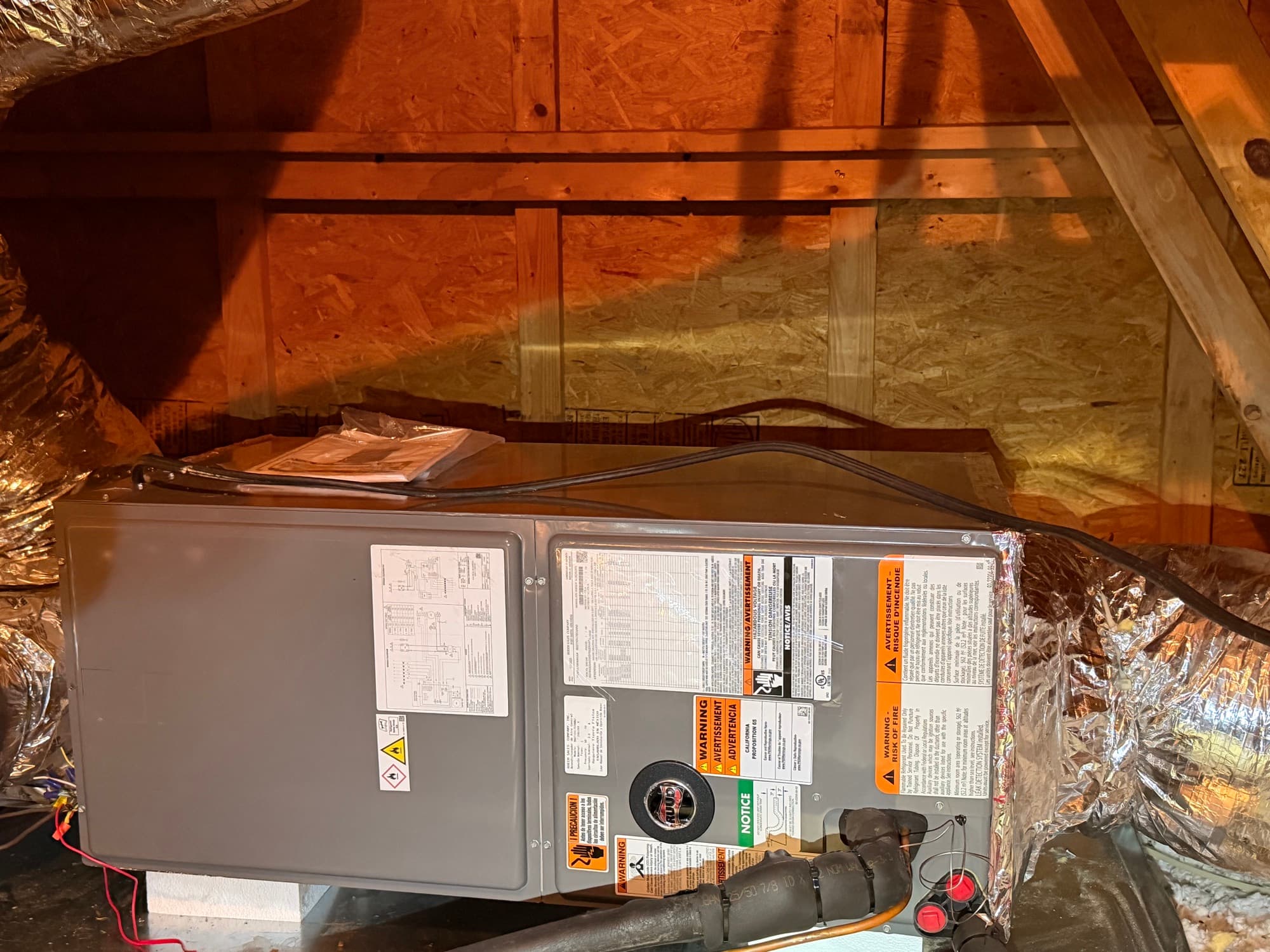
- Attic or crawlspace odors become stronger when the blower runs.
- Comfort loss is greatest in rooms served by exposed duct runs.
Before an evaluation of signs of leaky air ducts, gather the equipment model, approximate age, repair history, filter history, and any prior estimate so the recommendation starts from the same facts.
What a homeowner can check safely
Look only at safely accessible exposed ducts for loose connections or damaged insulation, and avoid entering hazardous attics or crawlspaces.
Safety boundary
Do not enter unsafe attics or crawlspaces, disturb suspect insulation or hazardous materials, cut ducts, adjust hidden dampers, or access blower and electrical compartments. Limit homeowner checks to visible, safely accessible grilles, filters, and room conditions. If you smell burning, suspect gas or carbon monoxide, see arcing, or feel unsafe, shut the system down from a safe location, leave the area when appropriate, and call emergency services or Restore at (864) 479-6737.
What the professional evaluation should answer
Inspect the full duct system and use pressure-pan, leakage, or airflow testing to locate and quantify meaningful losses.
Measurements related to signs of leaky air ducts should be interpreted against equipment design, manufacturer information, and the home's actual airflow and load—not an isolated rule of thumb.
- Is leakage occurring on supply ducts, return ducts, or both?
- How much measured leakage is outside the conditioned space?
- Are duct materials sound enough to seal, or do damaged sections need replacement?
Why Upstate South Carolina conditions matter
Hot attics, humid crawlspaces, long duct runs, additions, bonus rooms, and two-story layouts are common contributors to Upstate comfort complaints. Duct leakage and insulation condition can change with age even when the equipment itself still operates.
Comfort loss is greatest in rooms served by exposed duct runs.
How to choose the next step without guesswork
If signs of leaky air ducts leads to an expensive recommendation, compare the corrected system's expected condition—not only today's invoice—with the age and condition of the remaining equipment.
- Is leakage occurring on supply ducts, return ducts, or both?
- How much measured leakage is outside the conditioned space?
- Are duct materials sound enough to seal, or do damaged sections need replacement?