
What kinked flex duct airflow usually means
Sharp bends, compression, and long unsupported sags increase resistance in flex duct and can substantially reduce branch airflow. Simply increasing blower speed may add noise and pressure without fixing the restriction.
The first useful clue
A flex run has a sharp bend immediately off a trunk or boot.
Details that narrow down kinked flex duct airflow
- Long sections sag deeply between widely spaced supports.
- The affected branch delivers less air than a similar nearby run.
When documenting kinked flex duct airflow, photograph the thermostat display and any safely visible condition, then note the weather and whether the system had recently changed modes.
What a homeowner can check safely
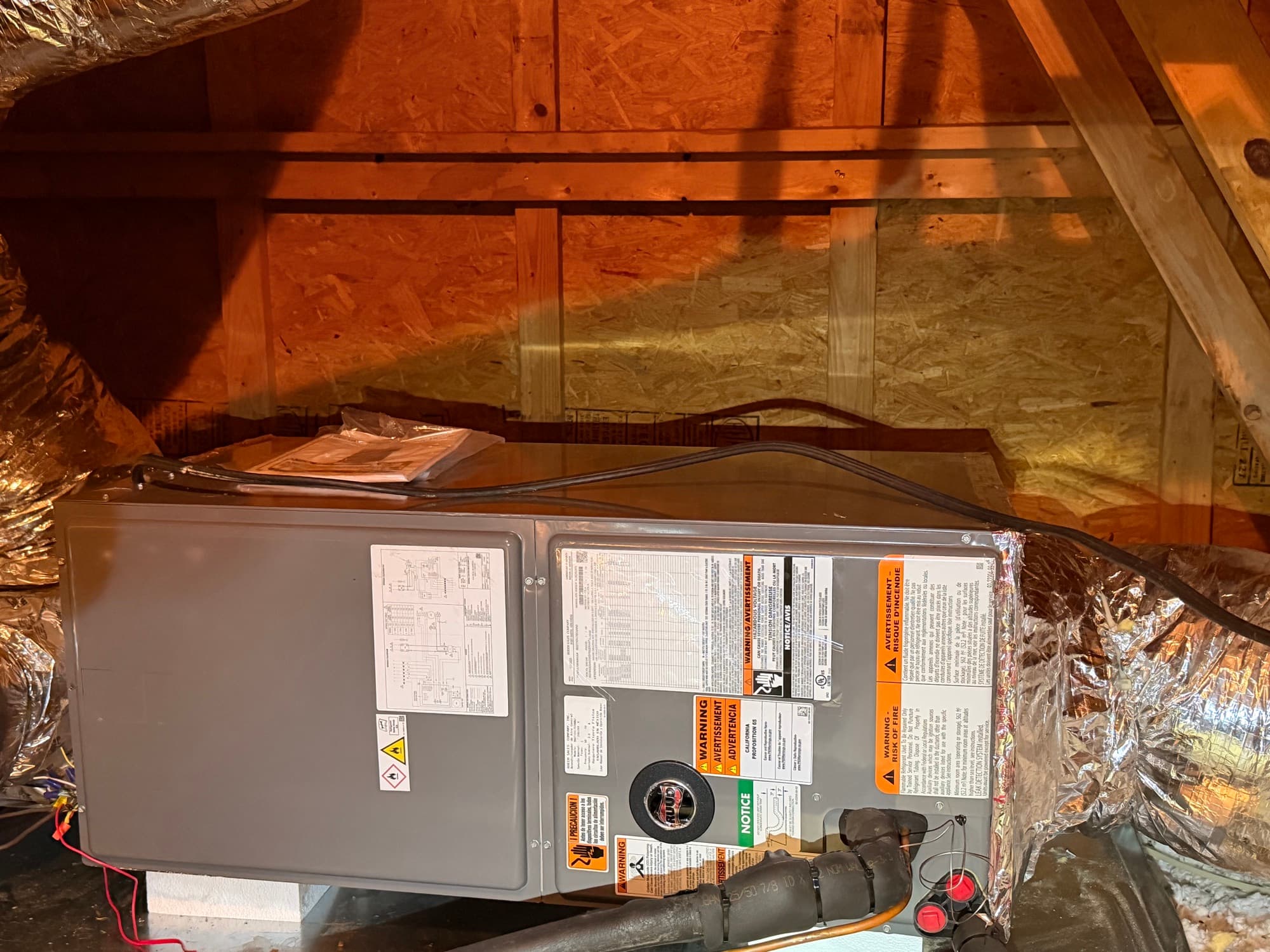
Photograph visible duct routing from a safe accessible area without stepping between attic joists or disturbing insulation.
Safety boundary
Do not enter unsafe attics or crawlspaces, disturb suspect insulation or hazardous materials, cut ducts, adjust hidden dampers, or access blower and electrical compartments. Limit homeowner checks to visible, safely accessible grilles, filters, and room conditions. If you smell burning, suspect gas or carbon monoxide, see arcing, or feel unsafe, shut the system down from a safe location, leave the area when appropriate, and call emergency services or Restore at (864) 479-6737.
What the professional evaluation should answer
Measure branch airflow, inspect bend radius and support spacing, calculate required duct capacity, and reroute or replace restricted sections.
The written finding for kinked flex duct airflow should distinguish the confirmed cause, contributing conditions, present risk, and optional improvements so each recommendation is clear.
- Is airflow loss caused by routing, compression, length, diameter, or a closed damper?
- Can the run be shortened and supported while preserving the required bend radius?
- What branch airflow is needed for the room rather than merely fitting the available space?
Why Upstate South Carolina conditions matter
Hot attics, humid crawlspaces, long duct runs, additions, bonus rooms, and two-story layouts are common contributors to Upstate comfort complaints. Duct leakage and insulation condition can change with age even when the equipment itself still operates.
The affected branch delivers less air than a similar nearby run.
How to choose the next step without guesswork
When deciding what to do about kinked flex duct airflow, ask which finding changes the decision today and which items can be monitored, maintained, or budgeted for later.
- Is airflow loss caused by routing, compression, length, diameter, or a closed damper?
- Can the run be shortened and supported while preserving the required bend radius?
- What branch airflow is needed for the room rather than merely fitting the available space?