
What ductwork sweating condensation humid climate usually means
Duct condensation forms when a duct surface falls below the surrounding air's dew point, often because of damaged insulation, air leakage, high ambient humidity, or unusually cold supply air. Wiping the water does not correct the moisture mechanism.
The first useful clue
Water beads on the outer duct jacket during humid weather.
Details that narrow down ductwork sweating condensation humid climate
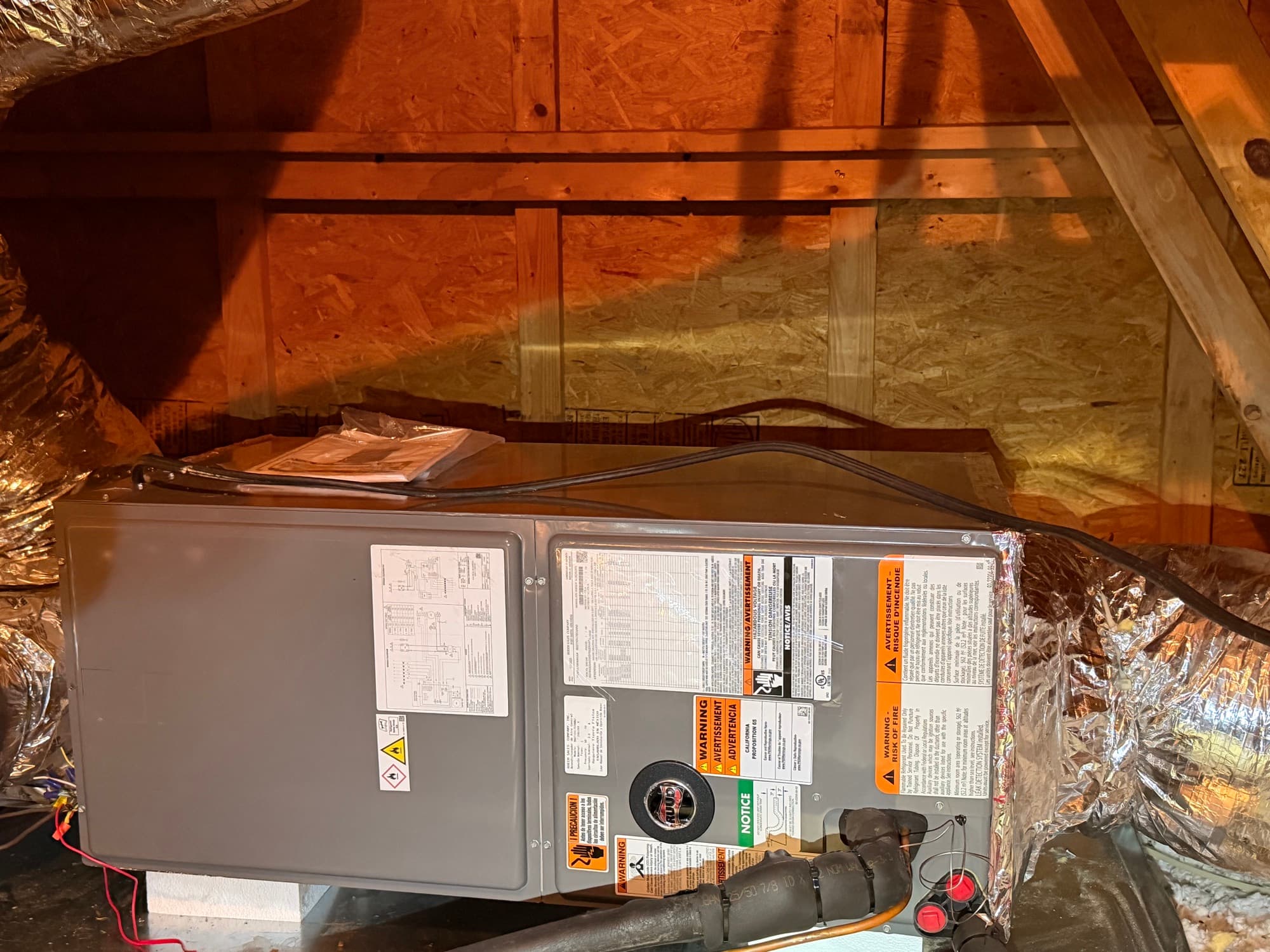
- Condensation concentrates at torn insulation, metal boots, or air leaks.
- The surrounding attic or crawlspace has persistently high humidity.
Define the result you need from ductwork sweating condensation humid climate—restored operation, more even rooms, moisture control, lower risk, or a replacement decision—so the visit answers the right question.
What a homeowner can check safely
Photograph where condensation appears and protect belongings, but avoid wet electrical areas and do not wrap actively wet ducts with new insulation.
Safety boundary
Do not enter unsafe attics or crawlspaces, disturb suspect insulation or hazardous materials, cut ducts, adjust hidden dampers, or access blower and electrical compartments. Limit homeowner checks to visible, safely accessible grilles, filters, and room conditions. If you smell burning, suspect gas or carbon monoxide, see arcing, or feel unsafe, shut the system down from a safe location, leave the area when appropriate, and call emergency services or Restore at (864) 479-6737.
What the professional evaluation should answer
Measure dew point and duct surface temperature, inspect vapor barriers and leakage, verify airflow, and identify the surrounding moisture source.
A clear proposal for ductwork sweating condensation humid climate states what was tested, what remains uncertain, what the correction includes, and how operation will be verified afterward.
- Is the duct surface actually below the measured surrounding dew point?
- Are insulation gaps, supply leakage, or unusually low airflow making the surface colder?
- What ambient moisture source must be corrected so repaired insulation stays dry?
Why Upstate South Carolina conditions matter
Hot attics, humid crawlspaces, long duct runs, additions, bonus rooms, and two-story layouts are common contributors to Upstate comfort complaints. Duct leakage and insulation condition can change with age even when the equipment itself still operates.
The surrounding attic or crawlspace has persistently high humidity.
How to choose the next step without guesswork
Keep the measurement record and written scope for ductwork sweating condensation humid climate; it gives another technician the same starting point and makes future decisions less dependent on memory.
- Is the duct surface actually below the measured surrounding dew point?
- Are insulation gaps, supply leakage, or unusually low airflow making the surface colder?
- What ambient moisture source must be corrected so repaired insulation stays dry?