
What ductwork popping banging noise usually means
Sheet metal can flex as temperature and pressure change, while loose panels, supports, dampers, or high static pressure can make the sound worse. A single mild pop may be harmless, but new or forceful movement deserves inspection.
The first useful clue
The pop occurs at the same point during startup or shutdown.
Details that narrow down ductwork popping banging noise
- Noise is stronger after filter, blower, or register changes.
- A large flat duct panel visibly flexes from an accessible location.
For ductwork popping banging noise, record when the condition appears, how long it lasts, which rooms or operating modes are affected, and what changed immediately beforehand.
What a homeowner can check safely
Note the sound location and whether it occurs at startup, shutdown, heating, or cooling without opening duct or equipment panels.
Safety boundary
Do not enter unsafe attics or crawlspaces, disturb suspect insulation or hazardous materials, cut ducts, adjust hidden dampers, or access blower and electrical compartments. Limit homeowner checks to visible, safely accessible grilles, filters, and room conditions. If you smell burning, suspect gas or carbon monoxide, see arcing, or feel unsafe, shut the system down from a safe location, leave the area when appropriate, and call emergency services or Restore at (864) 479-6737.
What the professional evaluation should answer
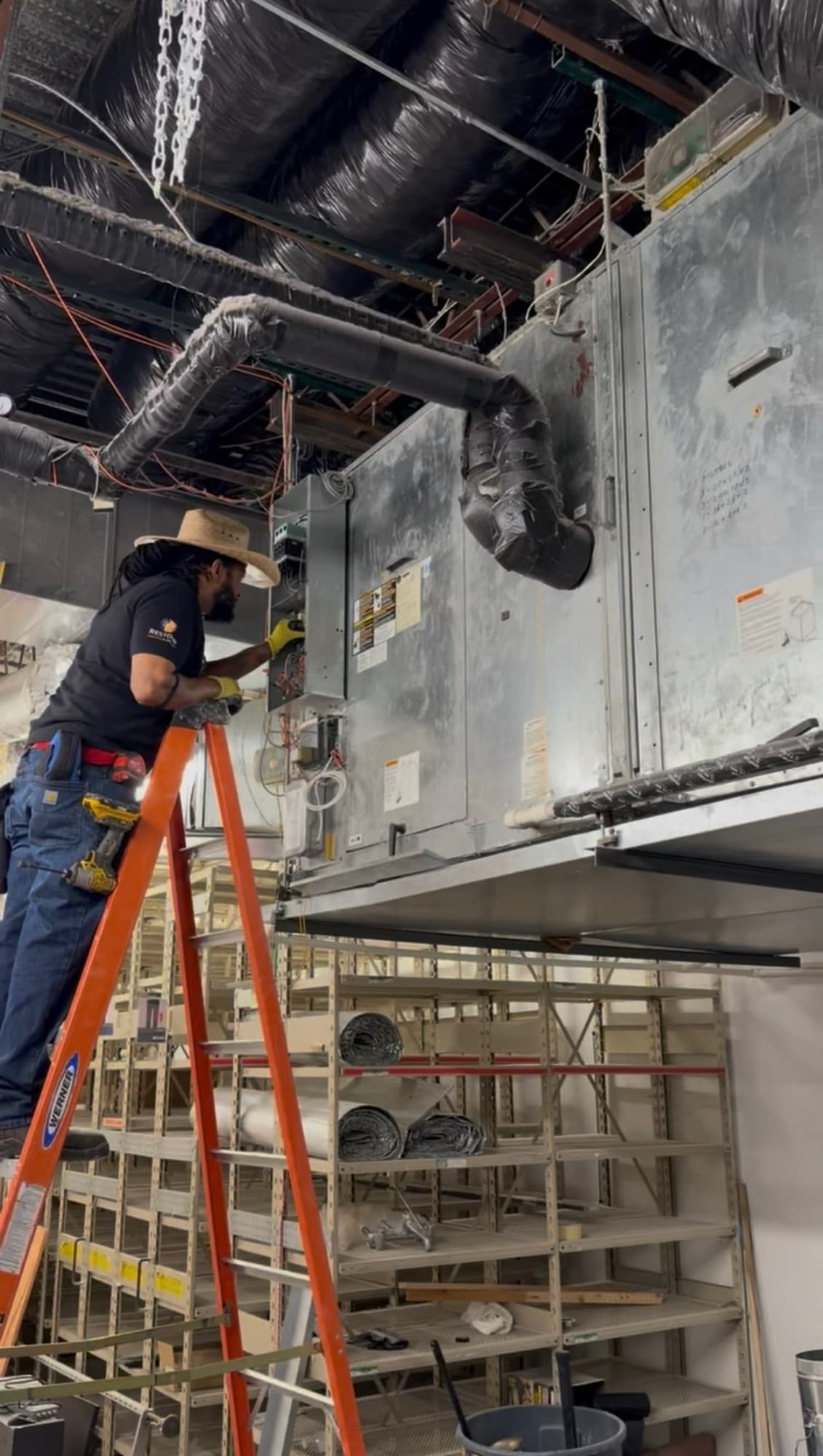
Measure static pressure, inspect duct gauge and reinforcement, supports, transitions, dampers, and blower ramp settings.
A useful diagnosis of ductwork popping banging noise connects the complaint to repeatable measurements under the conditions that produce it; a single symptom or part guess is not enough.
- Does the sound follow thermal expansion, pressure change, or a loose component?
- Is measured static pressure forcing an inadequately reinforced panel to flex?
- Will correcting airflow, support, transition shape, or reinforcement address the actual cause?
Why Upstate South Carolina conditions matter
Hot attics, humid crawlspaces, long duct runs, additions, bonus rooms, and two-story layouts are common contributors to Upstate comfort complaints. Duct leakage and insulation condition can change with age even when the equipment itself still operates.
A large flat duct panel visibly flexes from an accessible location.
How to choose the next step without guesswork
For ductwork popping banging noise, separate the immediate problem from secondary improvements, then compare the evidence, scope, warranty, exclusions, and verification plan.
- Does the sound follow thermal expansion, pressure change, or a loose component?
- Is measured static pressure forcing an inadequately reinforced panel to flex?
- Will correcting airflow, support, transition shape, or reinforcement address the actual cause?