
What AC running but house stays hot usually means
An AC can run without catching up when airflow is restricted, heat gain is high, or a refrigeration or electrical fault has reduced capacity; Upstate SC humidity can make the discomfort more noticeable.
The first useful clue
The thermostat reading stalls above the setpoint during a long cooling cycle.
Details that narrow down AC running but house stays hot
- Supply air feels cooler than the room, but comfort improves very slowly.
- Indoor humidity remains high even while the outdoor unit continues running.
For AC running but house stays hot, record when the condition appears, how long it lasts, which rooms or operating modes are affected, and what changed immediately beforehand.
What a homeowner can check safely
Confirm windows are closed, the thermostat is set to cool, and the filter is not visibly clogged; keep equipment panels closed.
Safety boundary
Limit homeowner checks to normal controls, accessible filters, visible obstructions, and observations. Shut the system down and get help for burning odors, arcing, repeated breaker trips, suspected gas or carbon monoxide, or any check that requires opening equipment. If you smell burning, suspect gas or carbon monoxide, see arcing, or feel unsafe, shut the system down from a safe location, leave the area when appropriate, and call emergency services or Restore at (864) 479-6737.
What the professional evaluation should answer
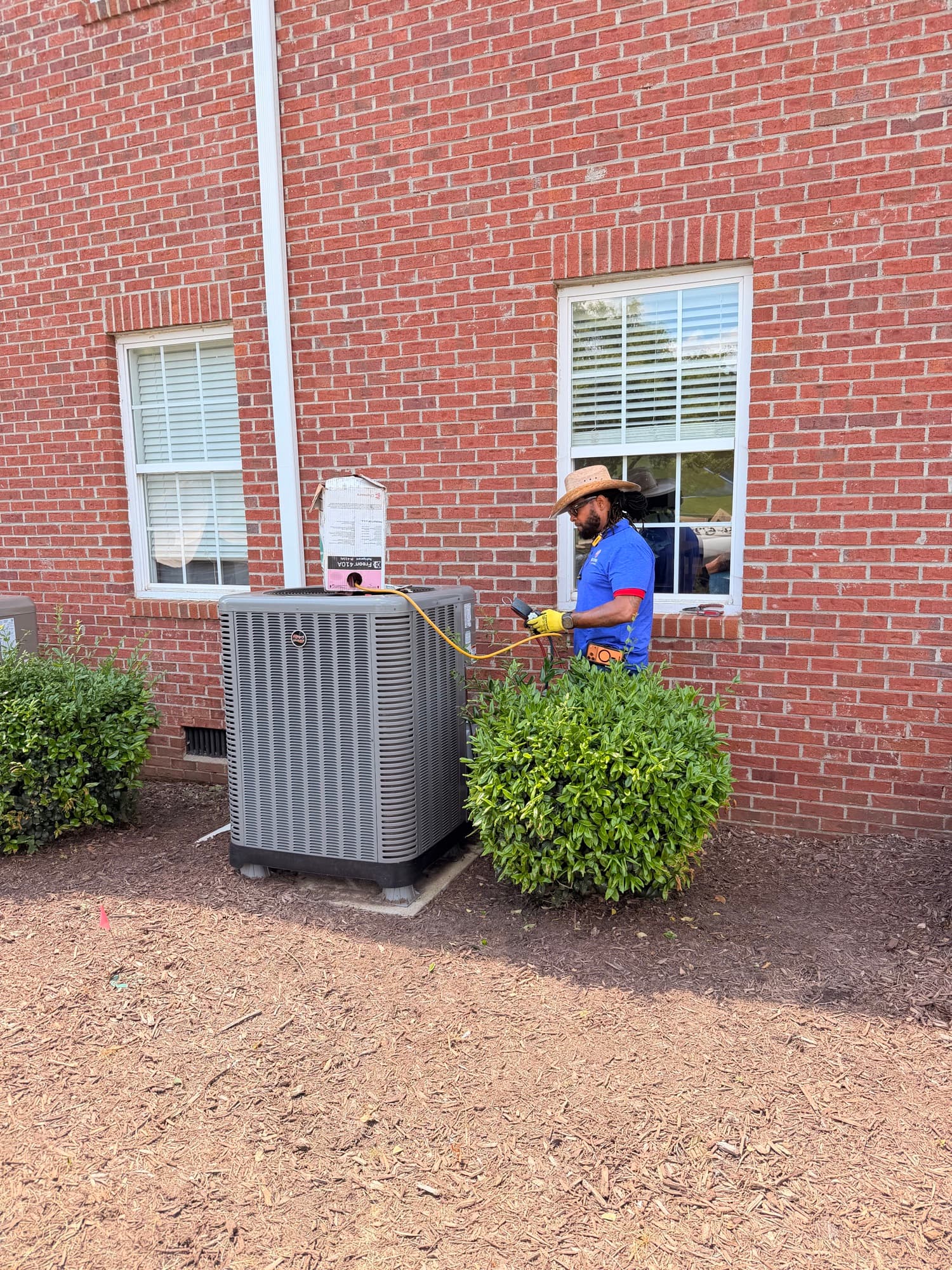
A technician can measure temperature change, static pressure, refrigerant performance, and compressor amperage to isolate the lost capacity.
A useful diagnosis of AC running but house stays hot connects the complaint to repeatable measurements under the conditions that produce it; a single symptom or part guess is not enough.
- What measured cooling capacity is the system delivering under current conditions?
- Do airflow or refrigeration readings identify the main loss of performance?
- Is the equipment appropriately sized for the home's documented cooling load?
Why Upstate South Carolina conditions matter
Long cooling seasons, humid air, spring pollen, hot attics, and summer thunderstorms place different loads on Upstate systems. Those conditions can expose drainage, airflow, electrical, and capacity problems that stayed hidden during mild weather.
Indoor humidity remains high even while the outdoor unit continues running.
How to choose the next step without guesswork
For AC running but house stays hot, separate the immediate problem from secondary improvements, then compare the evidence, scope, warranty, exclusions, and verification plan.
- What measured cooling capacity is the system delivering under current conditions?
- Do airflow or refrigeration readings identify the main loss of performance?
- Is the equipment appropriately sized for the home's documented cooling load?