
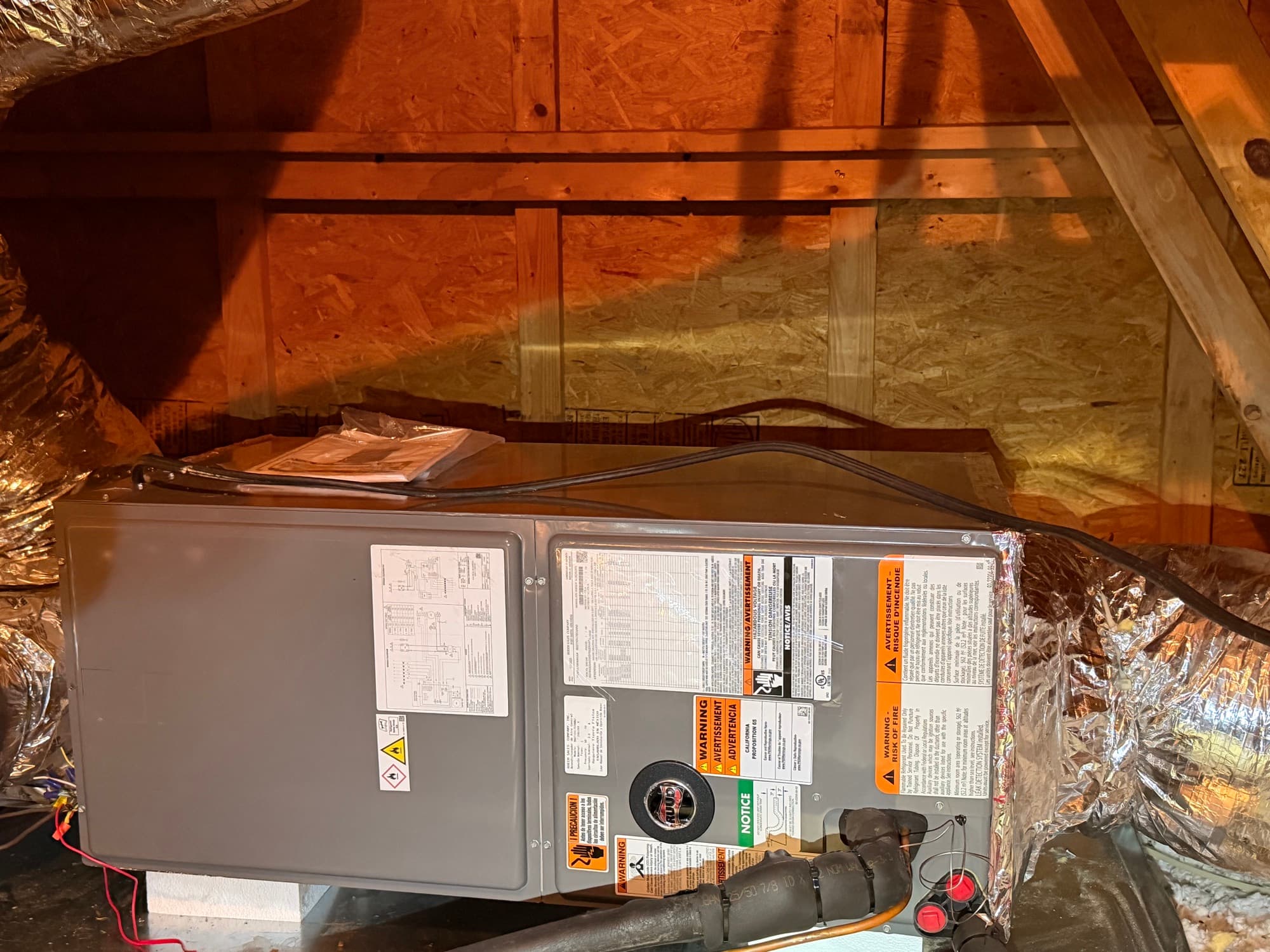
What evaporator coil maintenance usually means
An evaporator coil needs clean incoming air, correct airflow, drainage, and inspection for debris, corrosion, icing, and leakage.
The first useful clue
Dust is visible on the entering-air face rather than only the accessible surface.
Details that narrow down evaporator coil maintenance
- Coil icing, drain debris, or reduced airflow returns despite regular filter changes.
- Corrosion or oily residue appears near tubing or coil connections.
Define the result you need from evaporator coil maintenance—restored operation, more even rooms, moisture control, lower risk, or a replacement decision—so the visit answers the right question.
What a homeowner can check safely
Maintain the correct filter and report water or ice; do not open the cabinet or spray household cleaner on the coil.
Safety boundary
Follow the equipment manual and keep DIY maintenance outside sealed panels and hazardous areas. Electrical testing, refrigerant work, combustion analysis, internal cleaning, and repairs belong with trained professionals. If you smell burning, suspect gas or carbon monoxide, see arcing, or feel unsafe, shut the system down from a safe location, leave the area when appropriate, and call emergency services or Restore at (864) 479-6737.
What the professional evaluation should answer
A technician can inspect both coil faces, measure pressure and temperature performance, clean appropriately, and verify drainage.
A clear proposal for evaporator coil maintenance states what was tested, what remains uncertain, what the correction includes, and how operation will be verified afterward.
- Can both coil faces be inspected without damaging fins or insulation?
- Do pressure, airflow, and temperature readings show meaningful fouling?
- Which cleaning method is compatible with this coil and its coatings?
Why Upstate South Carolina conditions matter
Heavy pollen, humid condensate loads, extended cooling runtime, leaf debris, and abrupt shoulder-season changes can make Upstate maintenance needs different from a generic calendar. Inspection frequency should reflect the home, occupants, filter loading, and equipment condition.
Corrosion or oily residue appears near tubing or coil connections.
How to choose the next step without guesswork
Keep the measurement record and written scope for evaporator coil maintenance; it gives another technician the same starting point and makes future decisions less dependent on memory.
- Can both coil faces be inspected without damaging fins or insulation?
- Do pressure, airflow, and temperature readings show meaningful fouling?
- Which cleaning method is compatible with this coil and its coatings?