
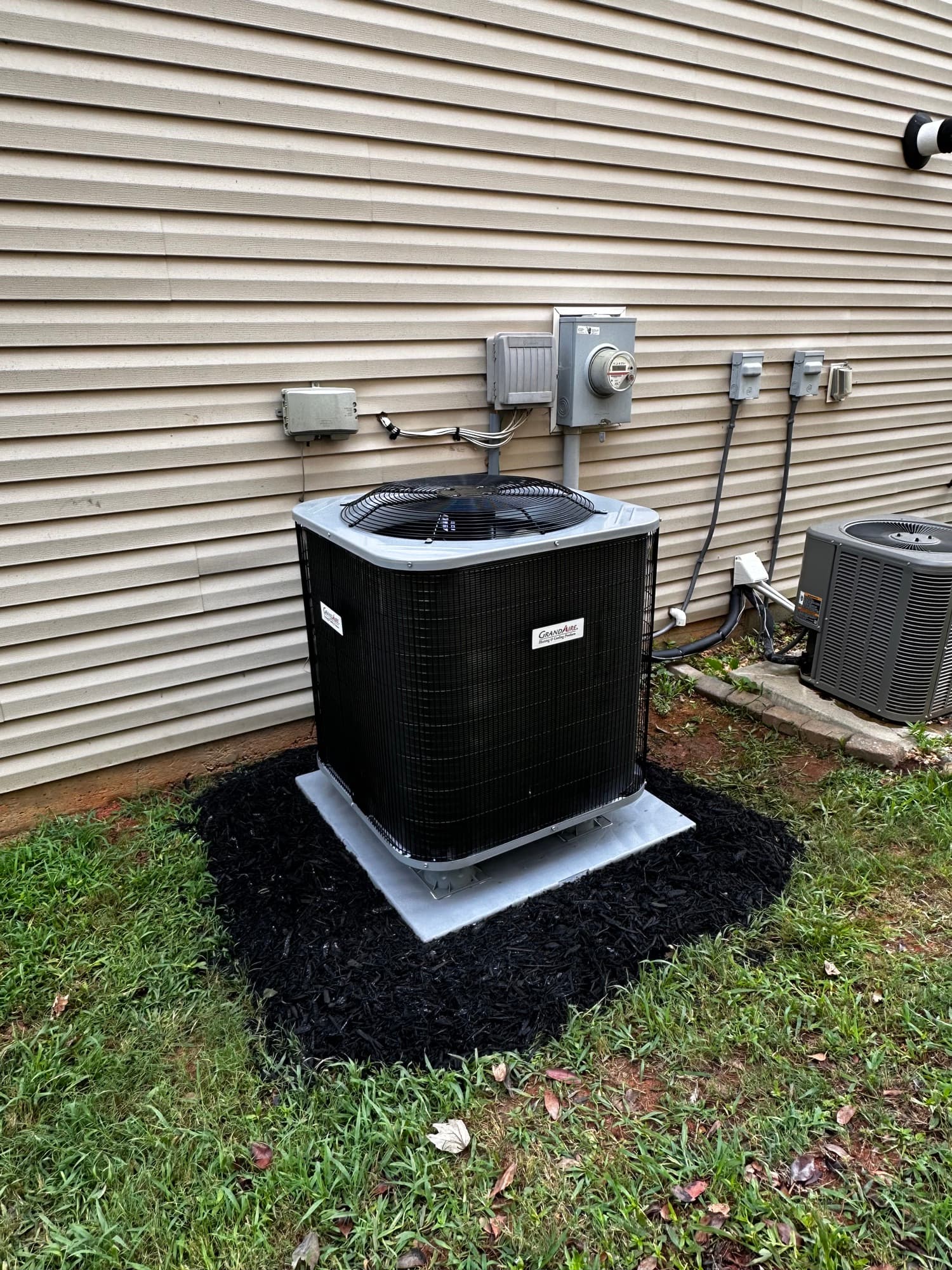
What AC not keeping up first hot day usually means
The first sustained hot day can expose a dirty filter, blocked coil, weak component, duct loss, or control problem that was not obvious in mild weather. A slightly longer cycle can be normal, but steadily rising indoor temperature deserves evaluation.
The first useful clue
Indoor temperature rises even though the thermostat is calling for cooling.
Details that narrow down AC not keeping up first hot day
- The outdoor unit is silent, unusually noisy, or cycles rapidly.
- Ice, water, or a new odor appears near the indoor equipment.
Before an evaluation of AC not keeping up first hot day, gather the equipment model, approximate age, repair history, filter history, and any prior estimate so the recommendation starts from the same facts.
What a homeowner can check safely
Confirm COOL mode, a reasonable setpoint, a clean filter, and open vents; stop the system and call for help if you see ice or smell burning.
Safety boundary
Never work on energized, flooded, storm-damaged, iced, or visibly unsafe equipment. After severe weather or an outage, use normal controls only and arrange an inspection when damage, burning, repeated tripping, or abnormal operation appears. If you smell burning, suspect gas or carbon monoxide, see arcing, or feel unsafe, shut the system down from a safe location, leave the area when appropriate, and call emergency services or Restore at (864) 479-6737.
What the professional evaluation should answer
Test the system at stable outdoor conditions and document delivered capacity indicators, airflow, electrical readings, and refrigerant temperatures.
Measurements related to AC not keeping up first hot day should be interpreted against equipment design, manufacturer information, and the home's actual airflow and load—not an isolated rule of thumb.
- Is the system simply running longer, or is indoor temperature continuing to climb?
- Did the problem begin only under sustained heat or also occur in mild weather?
- Which measured result separates an airflow, electrical, control, or refrigerant problem?
Why Upstate South Carolina conditions matter
Greenville-Spartanburg climate normals show hot summers, while the region also experiences humidity, heavy pollen, thunderstorms, occasional freezes, and rapid temperature swings. Seasonal HVAC planning should prepare for those real local loads rather than a generic national schedule.
Ice, water, or a new odor appears near the indoor equipment.
How to choose the next step without guesswork
If AC not keeping up first hot day leads to an expensive recommendation, compare the corrected system's expected condition—not only today's invoice—with the age and condition of the remaining equipment.
- Is the system simply running longer, or is indoor temperature continuing to climb?
- Did the problem begin only under sustained heat or also occur in mild weather?
- Which measured result separates an airflow, electrical, control, or refrigerant problem?